
Until the document is registered, the person responsible for the document can change its subject, description, files to be signed, and add new files or new versions of existing files.
Changes to the document are available to anyone who has the right to edit the document, including external contacts. Full information about this is available in the Access settings form. Read more about access control in the corresponding article.
The position that has the right to set tasks for the person responsible for the document according to the company's communication rules also has the right to edit the document. The document change event will show who made the changes and when they were made.
If the document has already received one or more signatures, the signatures will become invalid if the files to be signed are changed. The system will warn you about this before the changes to the document are saved.
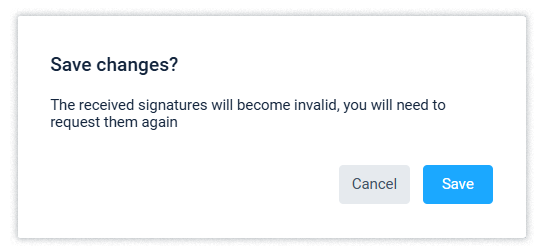
The system saves all versions of a document, including its card and signed files, if this version had at least one signature or approval that became invalid as a result of changes to the document.
Modifying a document signed by a counterparty
After receiving the Signatures of your company and Intercompany's external contacts, changes to such a document or adding signatures or stamps that were not previously provided for, will be available with the permission of all signatories. A signatory may give consent on his/her own initiative or in response to a request.
If an external contact has signed a document in the guest interface, their signature will not block the modification of the document. But of course, if the content of the signed files changes, all signatures and approvals of such a document will become invalid.
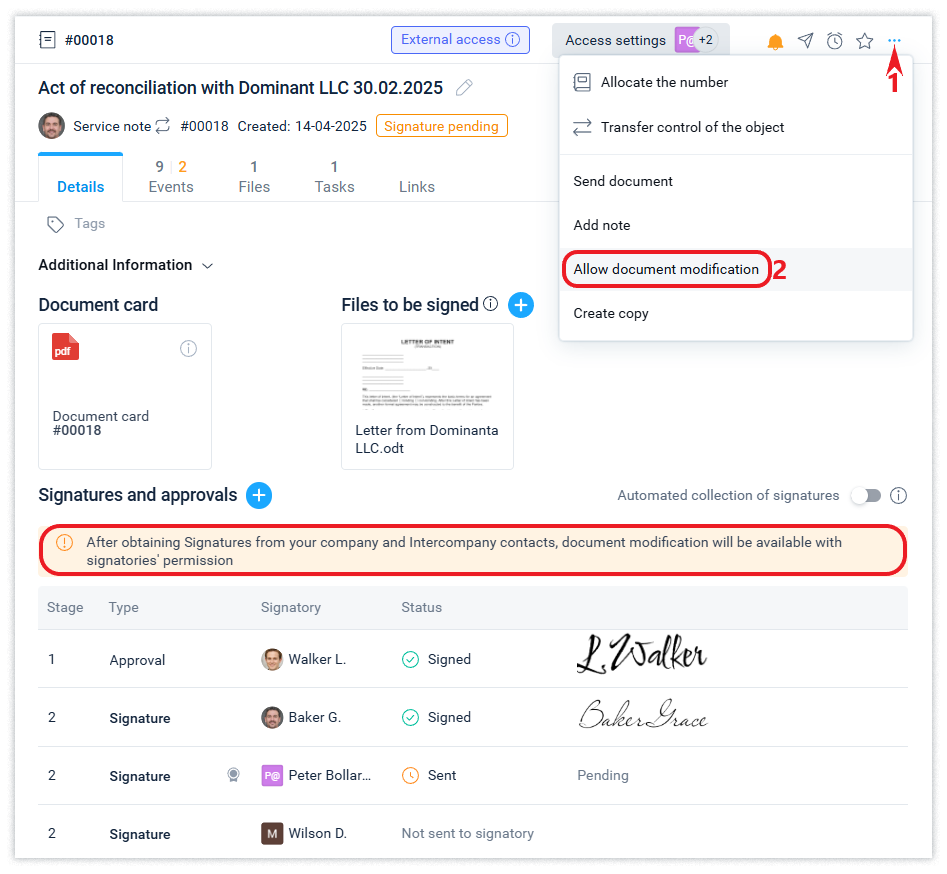
The counterparty, for its part, will have access to the “Allow document modification” action.
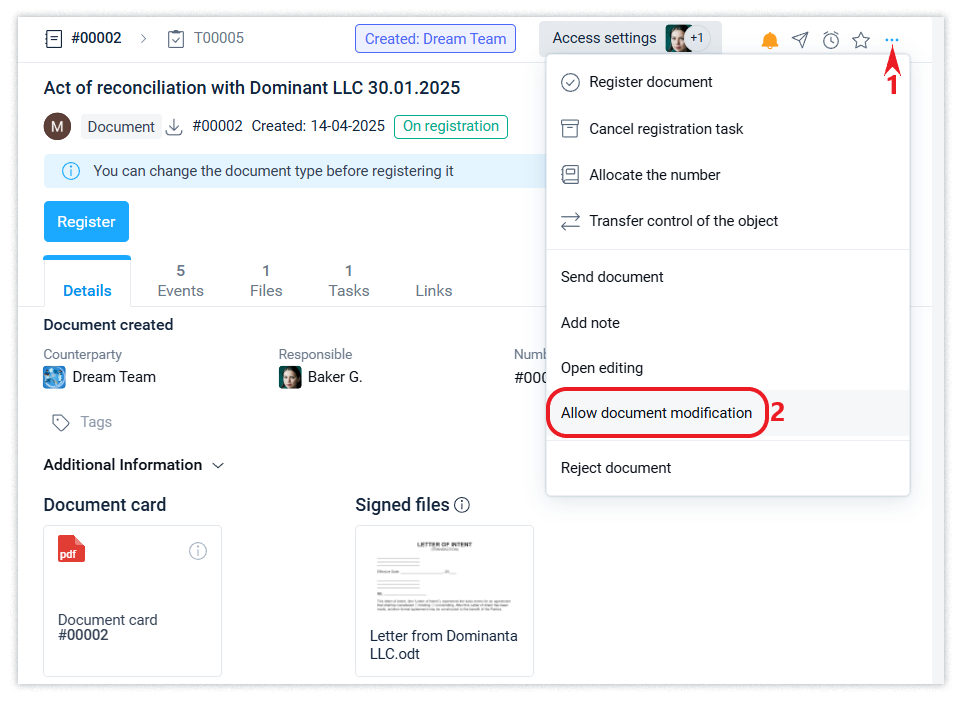
The function of granting permission to modify a document is available to Intercompany contacts whose signature is on the document. And after the consent of such external signatories, the responsible person and those who have the right to edit the document will be able to modify the document.
After the changes are made, the signatures already obtained will become invalid and will need to be obtained again.
Modifying a registered document
How to maintain flexibility without losing control? Document registration is a serious step, but we understand that life brings its own adjustments. If something needs to be changed in a document that has already been assigned a number and date, Shrift allows you to do so while adhering to security and access rights.
To open a document for editing, you need to perform the appropriate action from the context menu for the document.
When is permission for changes not required?
We have made this process as unbureaucratic as possible for cases where the risk of violating agreements with colleagues is minimal:
-
Single signatory: If you, as the responsible person, are the only one who has signed with a ‘Signature’ type, you can freely edit the document without any requests. The system trusts your right to correct your own decision.
-
Manager's right: The same rule applies to employees who have the right to assign tasks to the person responsible for the document. The manager can make changes independently without waiting for confirmation from subordinates.
When should you ask for permission?
If several people have placed ‘Signature’ type signatures, the document acquires the status of a ‘collective agreement’. In this case, the system activates protection mode:
-
You initiate a change to the document.
-
The system automatically sends a request to everyone whose signatures are already on the document.
-
As soon as they give their consent, the document becomes available for editing again.
Why is this important? This approach ensures that no one can change the terms of the contract or the content of the order ‘on the sly’ when other participants have already given their official consent. This is your insurance against manipulation and errors.
How do you request edits from those who have signed the document?

When everyone whose signatures appear on the document agrees to edit it, the requestor will be able to make modifications.

Modifying a document will move it to the Draft and Signed statuses according to the document's status. After all signatures are received, the document will return to the Registered status, meaning that re-registration is not required.
The registration number will remain the same as it was before the changes were made when the document is returned to Registered status, unless the manual control function for registration data is activated. In this case, the registration data can be changed.